


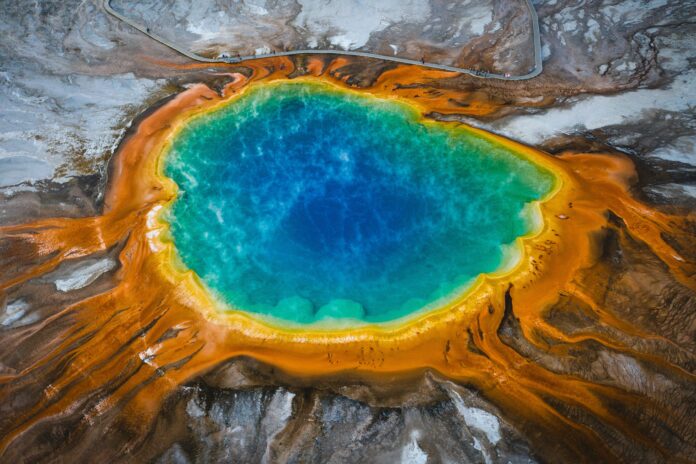
As food manufacturers grapple with rising energy costs and mounting pressure to decarbonize operations, an abundant clean energy source lies right beneath their feet. Geothermal energy, long confined to geologically active regions like Iceland and the western United States, is poised for a dramatic expansion thanks to next-generation drilling technologies that can access underground heat virtually anywhere.
From pasteurization requiring ~63°C to drying operations up to 150°C, the temperature ranges needed for food processing align perfectly with what enhanced geothermal systems can reliably deliver. And unlike fossil fuel boilers, geothermal provides consistent, around-the-clock heat with no fuel costs and minimal emissions.
While next-generation geothermal systems require significant upfront investment — around $20 million for development — they offer low operating costs without relying on purchased fuels. For large facilities spending over $1 million annually on natural gas, geothermal systems could prove more economical over their 20+ year lifespan.
To explore geothermal’s emerging role in food manufacturing, we spoke with Nathan Mariano and Antoine Merlo, co-authors of a comprehensive new report from UC Santa Barbara’s 2035 Initiative. Their research examines how next-generation geothermal technologies can provide clean, reliable process heat to slash emissions across industrial sectors, including food and beverage applications.
Q: What specific food and beverage processes are the best candidates for geothermal conversion, and what temperature ranges can next-generation geothermal systems reliably deliver?
Nathan Mariano and Antoine Merlo: Most food and beverages processes rely on low temperatures from hot water (40°C to 80°C) or low-pressure steam (up to 120°C). These processes include, but are not limited to:
- Drying (sugar processing, starch drying, fruits and vegetables, …)
- Leaching/steeping (corn processing, beet sugar, salt brine)
- Evaporation/concentration (beet sugar, distilleries)
- Sterilization
- Pasteurization (milk processing)
These low temperature processes are especially suited to geothermal as these temperatures are achievable at relatively low drilling depths. For example, most of the South and West of the United States has access to resources at 100°C at depths of less than 2km.
Meanwhile, next-generation geothermal power plants access rock at temperatures up to 400–500°C, which can produce working fluid temperatures well above 200°C. One near-term opportunity explored below is to utilize the waste heat from geothermal power generation. One facility reports using cascading heat from a nearby geothermal power plant at temperatures as high as 116°C.
Applications that only require very low temperatures – such as space heating – do not require next-generation geothermal, which entails drilling several kilometers into the earth. Geothermal heat pumps (also known as “ground-source” heat pumps) can serve these functions and are less capital intensive.
Q: How do the economics of geothermal heat compare to natural gas boilers over a 10-20 year period, and what factors most significantly impact the payback timeline?
NM and AM: It is important to note that we do not have a first-of-a-kind manufacturing site using next-generation geothermal yet, so we must speculate a little.
The capital costs for next-generation geothermal development come in at around ~$20 million. This includes the cost of appraising the geological characteristics of a site and of drilling the wells, but does not include many of the costs associated with operating equipment.
Importantly, geothermal systems have low operating costs and do not rely on purchased fuels, unlike gas boilers. This makes the up-front investment more economical than one might think. A large food and beverage facility can spend upwards of $1 million per year on natural gas. If a boiler is used for more than 20 years, it could end up being more expensive than geothermal over its lifetime.
Of course, incurring the entire cost of the system up-front carries additional challenges with cost and financing. But depending on one’s future discount rate, next-generation geothermal systems are increasingly competitive with natural gas boilers.
There are several factors that can improve the cost proposition of geothermal:
- A single geothermal site produces many times more energy than one facility can use. Fervo Energy’s Utah site has a 2GW capacity. Thus, multiple co-located facilities could make use of a single geothermal wellfield and share the capital costs involved in next-generation geothermal development.
- The deeper you drill a geothermal well, the higher the temperature of the rock and the higher the costs of drilling. Direct industrial heat requires lower temperatures than power generation. Therefore, a dedicated geothermal site for manufacturing would not need to drill as deep, which would significantly lower capital costs.
- As mentioned above, a facility could purchase steam as waste heat from a geothermal power plant. Right now, geothermal power plants incur costs from cooling the working fluid after it is used to generate steam for power. As a result, a geothermal power plant could sell heat to a manufacturer at a price well below that needed to recoup the full capital investment and still benefit from the arrangement.
Our colleagues at Project Innerspace have produced a handy tool to evaluate the economics of drilling and geothermal heat production, available here. This is a great resource for anyone interested in the potential costs of geothermal at a given location.
Q: What does the conversion process actually look like for an existing food facility. How long does it take, what equipment changes are required, and how much operational disruption should we expect?
NM and AM: This will vary by facility. A geothermal system can either function as a 1-to-1 replacement for a facility’s hot water or steam boiler or supplement the existing utility system. A facility could continue operating during geothermal development, only needing to shut down to attach a loop from a geothermal heat exchanger to the facility’s steam or hot water loop. Depending on how the combustion unit was integrated into the production process, this could be simple or more complex.
The equipment necessary depends on who is responsible for owning and operating the geothermal wellfield. A heat exchanger would be needed to transfer heat from the fluid that interacts with the earth to another working fluid. Specialized equipment such as fluid scrubbers and two-phase separators can be required to manage the geothermal fluid. If the facility enters a heat-as-a-service model, though, this equipment would not be the responsibility of the facility (see below).
If the steam from a geothermal source has different temperature or pressure characteristics than the steam from the gas boiler, other process units could need to be replaced or adjusted accordingly. Temperature fluctuations are one consideration, with additional equipment needed to deal with such fluctuations, if they are characteristic of the geothermal site.
Q: How does the heat-as-a-service model work in practice, and what are the key contract terms and risk allocations that food manufacturers should understand?
NM and AM: In a heat-as-a-service model, the heat solutions provider – in this case, a geothermal company – bears the cost of developing and installing the heat system. That company owns, operates, and maintains the system for the duration of the service contract. These contracts often span 10 to 20 years to align with capital recovery timelines.
Once operational, the manufacturer purchases heat from the solutions provider on a per-BTU basis. Different pricing arrangements are possible depending on how the project was financed, whether there was cost-share in capital expenditures, timeline to cover project equity, etc. In some models, the provider bears the risk of resource underperformance; in others, risk is shared or passed to the offtaker, which should be clarified early in contract negotiation.
Heat-as-a-service contracts can include “stage-gate” clauses with off-ramps during project development. At pre-specified stages during development, if the project isn’t financially viable, the customer can terminate the contract. This arrangement can lower risk to the manufacturer.
Q: Given that most food facilities aren’t located near existing geothermal resources, how realistic is next-generation geothermal deployment for a typical food manufacturer, and what’s the timeline for broader commercial availability?
NM and AM: “Conventional” geothermal systems require an existing, naturally occurring underground reservoir of hot fluid, seen in particular places such as Yellowstone and Iceland. Next-generation systems do not require existing reservoirs of hydrothermal fluid and can deploy virtually anywhere. While some areas are more suitable by virtue of having temperature resources available at lower depths, subsurface rock that is better for drilling, etc., next-generation geothermal has much wider geographical potential.
The bottleneck here is capital costs and project finance. Fortunately, the costs of developing next-generation geothermal are decreasing rapidly. Nonetheless, for an individual facility or group of facilities, developing next-generation geothermal on-site would likely require a green premium, given the current economics of geothermal development.
In the near term, a food and beverage manufacturer could locate near an existing next-generation geothermal power plant and use the power plant’s waste heat, which helps project economics a great deal since development has already been completed. This can happen now but requires a facility willing to locate near an existing or forthcoming power site.
Or, a group of manufacturers could coordinate to jointly develop a next-generation geothermal site, perhaps in conjunction with a power plant. Sites for geothermal power plants are typically chosen based on geological suitability and proximity to electricity transmission, but having a group of industrial heat buyers would be a major factor, too. This would require coordination between manufacturers and geothermal power companies.
Another avenue to improve project economics is policy support. The Trump Administration has consistently signaled support for geothermal. So there could be opportunities to secure funding for new projects at the federal and state levels – especially with the added voice of food manufacturers that are interested in deploying this technology.
Finally, manufacturers in some parts of the country could consider adopting a conventional geothermal system. While conventional geothermal does not carry the same long-term potential to scale, it is a proven technology for decarbonizing process heat that could be more cost effective in areas with accessible conventional geothermal resources. There is precedent for this in milk pasteurization, food drying, and beer brewing. If there is a known and accessed geothermal resource nearby (for example, a geothermal bath area, power plant, or a district heating system), a facility could tap into this without bearing the costs of resource assessment and development.
Geothermal heat represents a promising alternative to fossil fuel boilers for many food processing operations, especially as drilling costs drop rapidly and next-generation technologies expand geographic viability. While individual facilities may find upfront costs challenging, collaborative approaches — including co-located industrial parks and partnerships with geothermal developers — can make projects economically viable.
To learn more about the potential of next-generation geothermal technologies, download the full report: “Unlocking Next-Generation Geothermal Heat for Industry.”
 Nathan Mariano is a postdoctoral researcher in climate policy at The 2035 Initiative at UC Santa Barbara. He previously completed a PhD in political science from UC San Diego.
 Antoine Merlo is a Postdoctoral Scholar at The 2035 Initiative. He studies decarbonized technologies in the industrial sector with the goal of constructing a database of those technologies and modeling the impact of their implementation in order to inform policy. Before joining the 2035 initiative, Antoine earned a PhD in the University of Liege in Belgium on the economic and environmental assessment of novel manufacturing technologies.