
By Wayne Kendall, Regional Business Development Manager, Process Industries, Americas, Watson-Marlow Fluid Technology Solutions
Key takeaways:
- Manual open-transfer methods ( trolleys, intermediate containers, and open handling) are a primary pathway for Listeria biofilm persistence in dairy plants. Closed-system pumping removes the exposure point entirely rather than relying on more rigorous cleaning of inherently difficult-to-sanitize equipment.
- Closed-system transfer is directly compatible with automated CIP, enabling more consistent, repeatable sanitation protocols that reduce pathogen load more reliably than manual scrubbing of open containers.
- The operational case reinforces the safety case: eliminating manual transfer reduces labor costs, removes production floor bottlenecks, and frees operators for higher-value work like quality assurance and system monitoring.
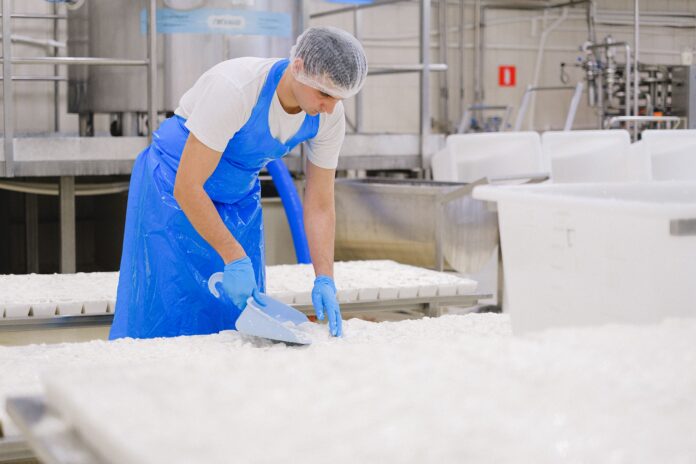
Dairy processors are facing unprecedented pressure to scale throughput and maintain efficiency within increasingly complex production environments. Despite modernization in other critical areas, many facilities still rely on open, manual transfer methods, such as large open trolleys, to move product between processing steps. This outdated practice creates significant operational bottlenecks and opens the door to severe cross-contamination.
The stakes are immense: foodborne illnesses constitute a massive global burden, with an estimated one in 10 people falling ill and 420,000 dying annually from contaminated food. Upgrading processing technology is vital to mitigate these risks. The solution? Transitioning from open handling to continuous, closed-system product flow. This fundamental shift simplifies workflows, eliminates intermediate manual coordination, and significantly boosts food safety by proactively mitigating pathogen exposure.
The hidden inefficiencies and safety risks of manual transfer
The use of manual transfer methods, like trolleys, to move products (for example, from pasteurization to mixing) is a source of operational bottlenecks. These methods require heavy labor, inevitably slow down production, and rely on complex coordination between multiple shift teams. Relying on 200-liter trolleys creates constant coordination challenges and high labor costs that hinder a facility’s ability to scale throughput efficiently. More critically, these manual processes pose a serious safety threat.
Every time a product is transferred manually in open containers, it is directly exposed to environmental contaminants. Intermediate containers and open handling equipment are notorious for harboring persistent pathogens, particularly Listeria monocytogenes biofilms. Research indicates that food contact surfaces with inadequate cleaning processes are a primary pathway for pathogen persistence, making it highly difficult to ensure a “zero load” of pathogenic microbiota. Open containers also increase the risk of spills, which further complicates maintaining a sanitary production environment.
Eliminating contamination risks through closed-system transfer
Recent literature emphasizes that the dairy industry must aggressively manage Listeria risks for both consumers and processors. Closed systems proactively engineer this critical risk out of the equation by maintaining product integrity within a controlled environment. The risks of inadequate sanitation are significant, as dairy products were identified as being responsible for 10% of foodborne illness investigations in recent FDA reports.
By pumping product directly from one stage to the next, facilities eliminate the need for intermediate trolleys and the error-prone manual handling that accompanies them, effectively removing the “middleman” container. Furthermore, closed-system pipelines are highly compatible with automated Clean-in-Place (CIP) systems. Implementing automated pumping systems allows for more standardized sanitation protocols that reduce the “zero load” of pathogenic microbiota. This enables a more rigorous, consistent chemical and thermal sanitation process to eradicate biofilm risks compared to the manual scrubbing of open trolleys, which can be inconsistent, labor-intensive, and prone to human error.
Building flexibility into hygienic processing
Closed-system transfer offers substantial hygienic and operational benefits, but dairy facilities still rely on flexible transfer components and portable equipment to support maintenance and sanitation requirements. CIP stations and flexible hose assemblies, such as PTFE hoses, can help facilities maintain hygienic operations while preserving the integrity of closed production systems. PTFE hoses offer broad compatibility across CIP cleaning media and a smooth, non-reactive product-contact surface that resists biofilm adhesion, two properties worth prioritizing when specifying flexible connections in dairy environments. Thoughtful transfer system design should therefore combine robust process control with the practical flexibility needed to support efficient cleaning, reliable product movement, and long-term equipment performance.
Industry best practices also include incorporating a short flexible connection between pumps and rigid process piping. These connections help accommodate minor misalignment and reduce stress on seals, gaskets, and adjacent equipment, improving reliability and equipment longevity.
In dairy processing environments, transfer components must withstand repeated exposure to rigorous CIP procedures, and materials that offer high temperature resistance and a smooth, non-reactive product-contact surface can support effective sanitation and minimize product carryover, extending the life of dairy production equipment.
Simplifying workflows and achieving labor savings
Beyond hygiene, closed-system flows deliver substantial operational improvements. Direct, automated product flow removes the chaotic physical traffic of moving materials across the plant floor, streamlining coordination and smoothing hand-offs between processing stages.
Labor can be repurposed efficiently. Operators who previously spent hours moving and washing heavy trolleys can be reallocated to higher-value tasks, such as quality assurance and system monitoring. By automating the transfer step, plant managers can significantly reduce operational variability, ensuring a highly consistent product flow and standardized batch timing that leads to predictable production.
Modernizing dairy handling for safer production
Modern food safety compliance requires operational efficiency, and more so demands the reduction of manual handling as a vital, practical strategy. As the dairy industry increasingly turns to automation to address labor shortages and bolster traceability, implementing automated pumping systems that move product directly after critical processing phases is becoming an essential method for enhancing control and mitigating risks.
Manufacturers can better protect public health and increase throughput by embracing continuous, closed-system flows and automated pumping. For example, placing a pump immediately after the cooking stage to automate transfer to mixers or filling lines removes the significant risks inherent in manual dairy product handling. This forward-thinking strategy aligns with the industry-wide move toward closed, automated environments that foster safer and more uniform production.
To protect both their financial performance and product integrity, dairy plant managers should evaluate their current processes to pinpoint manual bottlenecks and investigate automated transfer solutions. Moving away from open handling methods not only streamlines team coordination but also establishes a more efficient and predictable production setting, ensuring facilities can fulfill consumer safety demands and contemporary hygiene standards.
 Wayne Kendall is regional business development manager – process industries (Americas) at Watson-Marlow Fluid Technology Solutions. Under his leadership, Watson-Marlow empowers process industries through tailored, application-based solutions. With 15-plus years of experience in technical sales and customer-centric strategies, Wayne collaborates with inter-company teams to accelerate brand visibility, ensuring seamless fluid path solutions for Watson-Marlow’s clients.