
Key takeaways:
- Nestlé’s capital spending fell as fast as its headcount. Capex dropped from 6.0% of sales in 2024 to 4.8% in 2025, and it’s guided lower again this year. Kraft Heinz and Tyson show the same pattern.
- The capacity being shed isn’t landing on co-packers. Contract manufacturing plants are running at 77.6% utilization, below the 80.2% long-run average, and the largest US co-packer is coming out of its own bankruptcy.
- Robots are selling. AI adoption in food manufacturing is not moving. Machinery orders are up double digits. AI use is flat at 14.9%, with food manufacturers projecting no change over the next six months.
Nestlé’s own numbers don’t support the robot story
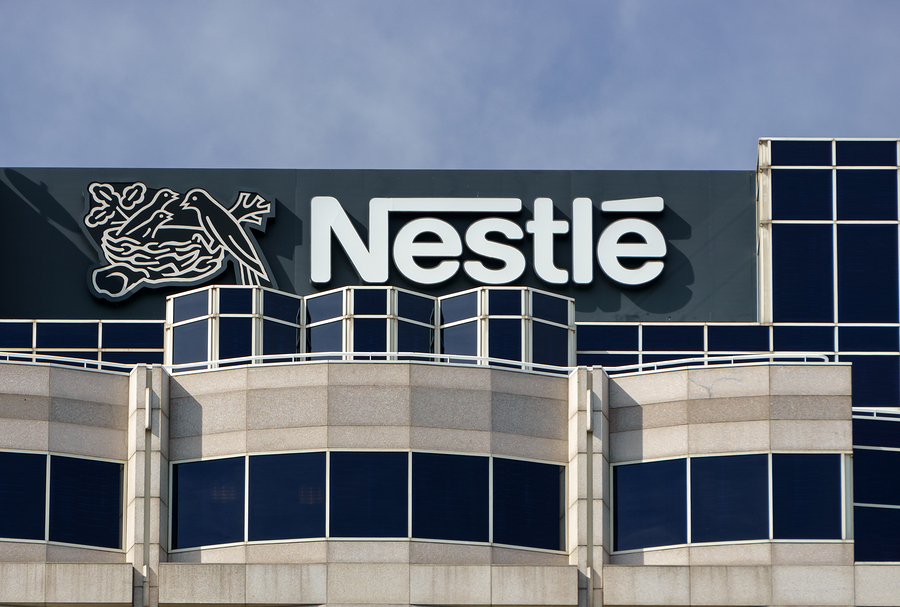
On October 16, 2025, CEO Philipp Navratil announced Nestlé would cut about 16,000 roles over two years: about 12,000 white-collar jobs, carrying CHF 1.0 billion in annual savings, and about 4,000 more in manufacturing and supply chain, with no savings figure attached at all. That second number is the one that got read as “Nestlé is replacing plant workers with machines.”
Nestlé’s capital spending says otherwise.
| Year | Nestlé capex, % of sales |
| 2023 | 6.1% |
| 2024 | 6.0% |
| 2025 | 4.8% |
| 2026 guidance | Lower still |
Source: Nestlé FY2025 investor presentation, slides 26 and 60.
CFO Anna Manz confirmed the trend directly: “Capex will normalize within the range of 4% to 5% of sales going forward.” First-half 2026 spending came in 27.5% below the same period last year. A company buying its way into automation would be spending more, not less.
And when Manz explained where the white-collar savings actually come from, she named the opposite of a tech story: fragmentation. Fourteen countries run fourteen different versions of the same claims process, she said, and that’s “making automation costly,” not the other way around. Standardize the process first. Automate later, if at all.
Kraft Heinz and Tyson are telling the same story
Kraft Heinz announced a corporate split in September 2025, then paused it five months later after a $9.3 billion writedown. Capex fell from $1.024 billion to $801 million in the same release, a 22% cut.
Tyson closed its Lexington, Nebraska beef plant in January, cutting over 3,200 jobs, with production simply shifting to plants it already owns. Its fiscal 2026 capex guidance has been cut twice, and the only automation dollar figure Tyson has ever disclosed dates to 2021.
It’s worth nothing that Campbell’s Paris, Texas layoffs, often listed alongside these, aren’t a closure. The plant stays open, converting to sauce production under a plan announced back in 2024.
The freed capacity isn’t going to co-packers, either
If large processors are shedding capacity, the obvious next question is whether contract manufacturers are picking it up. They’re not, because they’re already oversupplied.
The Federal Reserve puts food and beverage capacity utilization at 77.6% in June, below the 80.2% long-run average and close to the 2009 recession floor. Hearthside Food Solutions, the largest US contract food manufacturer, filed Chapter 11 in 2024 and is still closing plants in 2026. A 2026 survey of 1,000+ CPG manufacturers found one in three carrying 31% or more unused capacity.
Private equity is moving into this space anyway. Investindustrial recently took TreeHouse Foods private for $2.9 billion. It isn’t buying capacity, which is cheap and half-empty. It’s betting it can fill it.
Robots are selling. Software isn’t.
North American robot orders for food and consumer goods rose 16% in units in the first quarter of 2026. Meanwhile, Census Bureau data puts AI use in food manufacturing at 14.9%, trailing manufacturing overall by more than five points, and food manufacturers expect that number to stay flat over the next six months. Every other sector expects to grow.
So equipment is being bought, intelligence is not, and the company making the biggest headcount cut in the category seems to be spending the least on both.
What this means for your next capex meeting
Utilization matters more than capacity right now. With the sector average at 77.6%, a growth case built on tight supply won’t hold. Check your own number against it.
Co-man pricing has more room than it did three years ago. No index exists for this, but the supply and demand picture says the leverage has shifted. Test it in your next contract.
The AI gap is yours to close. A single-site operator doesn’t have Nestlé’s fourteen-country fragmentation problem. Standardization, which is the hard part for a company that size, is the part you’ve already got.
Nestlé said it’s cutting people to fund automation. Its own budget says the cutting is the plan, at least through 2027. That’s a smaller story than the one that got reported, and a more useful one if you’re deciding what to do with your own capital next quarter.